Solar Spice and Herb Dryers for Hygienic Agricultural Processing
Wiki Article
Introduction
Agricultural production does not end when crops are harvested. For many farmers and food businesses, the next challenge is preserving suitable produce and converting it into forms that can be stored, transported, or processed further. Drying is one of the traditional methods used for moisture reduction, and solar technology can modernise this process while continuing to use sunlight as the primary heat source.
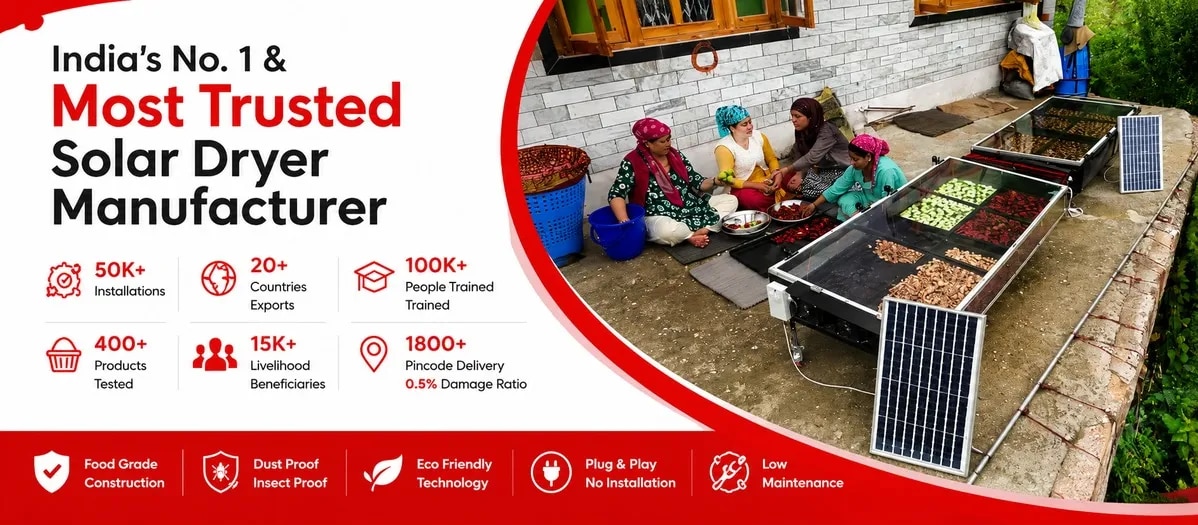
A solar drying machine can be considered by farmers, self-help groups, FPOs, cooperatives, rural entrepreneurs, and food-processing businesses that handle suitable agricultural products. Rudra Solar Energy offers solar dryers in different configurations and states that its systems can be evaluated according to the product, batch quantity, and processing requirements.
Why Farmers Consider Solar Drying
Fresh agricultural products can contain substantial moisture. Moisture reduction may be required for storage, transportation, further processing, or preparation of dried products.Open-sun drying can perform this function, but the product remains exposed to the outdoor environment. A solar drying machine moves the process into an enclosed chamber.
From Harvest to Value Addition
Value addition means doing more than simply selling a raw agricultural commodity. Suitable products can sometimes be cleaned, prepared, dried, packaged, and sold as processed ingredients.Examples may include dried fruits, dried vegetables, herbs, spices, flowers, and other suitable products.
The economic outcome of such processing depends on many factors, including raw material cost, processing efficiency, packaging, market demand, quality requirements, labour, transport, and selling price. A dryer alone does not guarantee profitability.
How an Agricultural Solar Dryer Works
A solar agricultural dryer uses solar heat to warm air and facilitate moisture removal. The product is normally placed on trays inside an enclosed chamber.Rudra Solar Energy's agricultural products dryer is described as a multi-commodity system for suitable fruits, vegetables, grains, pulses, spices, oilseeds, seeds, and other farm produce. The company lists capacity configurations from 5 kg per batch to 500 kg per batch, with model-dependent heating and airflow arrangements.
The Importance of Airflow
Airflow plays an important role because the drying air needs to interact with the product and carry away moisture.The ideal airflow arrangement depends on the product and dryer configuration. Loading too heavily or unevenly can affect drying uniformity.
Planning a Farm Level Drying Project
Before purchasing equipment, a farmer or organisation should first understand its processing requirement. The first question is not simply which solar dryer to buy. It is what product needs to be dried and in what quantity.A useful planning exercise can include:
- Identifying the primary crops or products
- Estimating fresh quantity available for processing
- Determining seasonal availability
- Understanding the desired dried form
- Estimating daily or weekly processing requirements
- Checking available installation space
- Assessing electricity availability
- Considering future expansion
Rudra Solar Energy recommends sharing details such as product, quantity, moisture conditions, processing season, installation space, and electricity availability when evaluating a Solar Drying Machine customised system.
Multi Commodity Drying
One advantage of a suitable multi-commodity dryer is that the same equipment may be considered for different products at different times of the year. This can be relevant in agricultural regions where different crops are harvested during different seasons.However, multi-product operation requires careful cleaning and process planning. Products with strong aromas or different processing requirements may need separate handling procedures.
Examples of Potential Applications
Depending on technical suitability, a solar agricultural dryer may be evaluated for:- Mango and other fruits
- Tomato and selected vegetables
- Chilli and other spices
- Herbs and medicinal plant materials
- Grains and pulses
- Oilseeds
- Seeds
- Selected flowers and agricultural materials
The actual suitability of each material should be established through product-specific evaluation rather than assuming identical drying conditions for every crop.
Solar Drying and Rural Enterprises
Solar drying can also support rural entrepreneurship. An SHG, FPO, cooperative, or small processing business may use drying equipment as part of a broader processing operation.Rudra Solar Energy states that its systems can be considered for farmers, SHGs, FPOs, tribal producer groups, cooperatives, food-processing businesses, and commercial processors.
The business model could involve processing internally produced crops or handling produce sourced from multiple farmers. In either case, capacity planning and product quality remain important.
Hygiene and Enclosed Processing
An enclosed drying chamber can reduce direct exposure to outdoor contamination compared with open-sun drying. Rudra Solar Energy describes its cabinet dryer as helping reduce direct exposure to dust, insects, birds, and sudden rain. :contentReference[oaicite:19]index=19However, hygiene depends on the entire processing chain.
Good Processing Practices
Operators should pay attention to:- Raw-material cleanliness
- Food-contact surface sanitation
- Tray cleaning
- Proper product preparation
- Controlled loading
- Protection after drying
- Appropriate packaging
- Dry and suitable storage conditions
The dryer should therefore be treated as one component of the food-processing system.
Understanding Solar Dryer Capacity
Capacity labels should be interpreted carefully. A stated batch capacity does not mean every product will have identical throughput or drying time.Different materials contain different amounts of moisture and may require different preparation. Rudra Solar Energy provides capacity configurations ranging from small 5 kg batches to larger 500 kg batch systems across its solar dryer range.
Why Product Testing Matters
Before committing to large-scale production, product trials can help determine loading methods, preparation requirements, drying conditions, and final product characteristics.This can be especially valuable when introducing a new commodity to an existing processing operation.
Conclusion
Solar drying can give farmers Solar Drying Technology and agricultural Best Quality Solar Dryer organisations another option for managing suitable produce after harvest. By using solar heat inside an enclosed drying system, businesses can move beyond basic open-sun drying and develop a more organised processing workflow.Rudra Solar Energy offers agricultural and food-processing solar dryer configurations that can be considered for different products and scales. Selecting the right system requires attention to the crop, moisture content, batch quantity, preparation method, airflow, available space, and operating schedule.
For farmers, FPOs, SHGs, and rural processing businesses, the strongest approach is to begin with a clear processing requirement and then match the equipment to that requirement. Solar drying can support value addition, but successful processing still depends on good raw materials, appropriate drying conditions, hygiene, packaging, storage, and a realistic understanding of the target market.
 Report this wiki page